
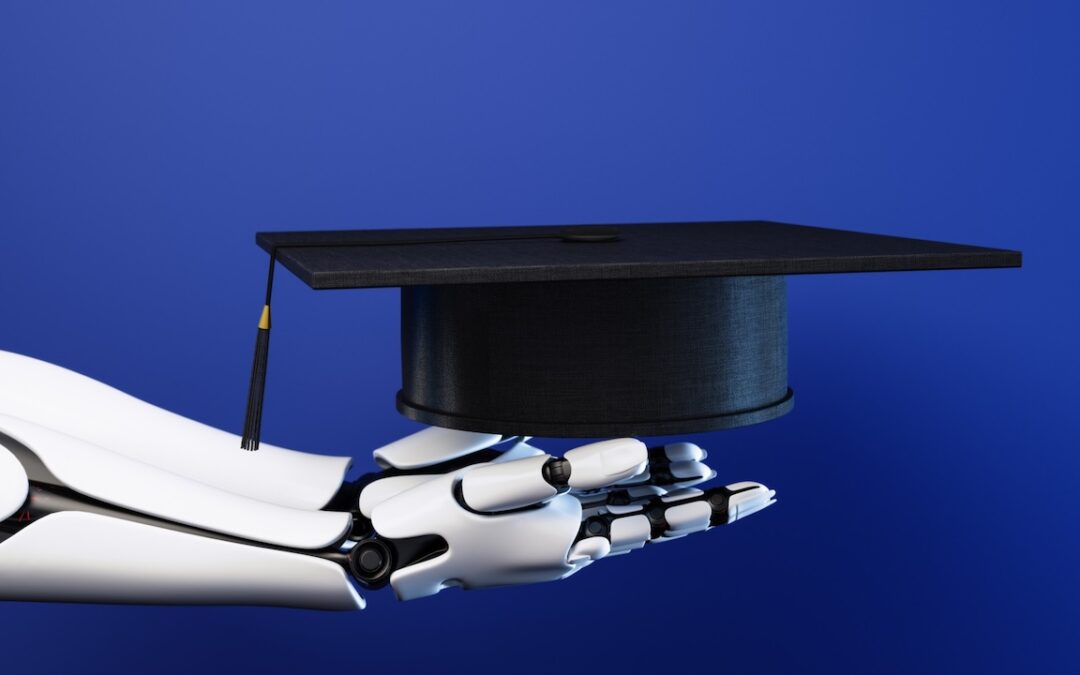
For years, the advice was simple: go study, get a degree, start at the bottom, and work your way up. That system worked because companies needed large numbers of junior employees to handle the repetitive, administrative work beneath senior professionals. Graduates entered businesses with limited experience, learned through repetition, absorbed institutional knowledge, and slowly climbed the ladder over time.
But AI is starting to break that model in a very real way.
One of the biggest workforce shifts happening right now is not taking place at the executive level. It is happening at the bottom of the career ladder. Graduate jobs, junior office roles, and entry-level knowledge work are increasingly taking place within the exact workflows AI can already accelerate, compress, or partially automate.
The uncomfortable reality is that many companies are quietly realising they may not need as many junior employees as they did before. The workforce data emerging from the AI Career Index already shows that entry-level jobs are becoming increasingly exposed to AI risk as automation reshapes the economics of knowledge work.
AI Is Compressing the Bottom of the Workforce First
Most people still think about AI the wrong way. They imagine robots replacing entire professions overnight, but that is usually not how disruption works. What happens first is compression.
A company that previously needed five junior staff members, two coordinators, a reporting assistant, and a content administrator might now realise that a much smaller team using AI tools can produce similar output. That immediately changes hiring behaviour, especially in industries built around information processing and administrative workflows.
This pattern is already appearing across marketing, finance, consulting, administration, media, recruitment, customer support, and technology. The issue is not necessarily that all graduate jobs disappear. The issue is that businesses begin needing fewer people to do the same work, which puts enormous pressure on the entry-level workforce.
Why Junior Work Is So Exposed to AI
Most entry-level jobs are built around structured execution. Junior employees are often responsible for research, summaries, reporting, documentation, basic analysis, content drafting, data processing, and administrative coordination. These are exactly the kinds of tasks modern AI systems are becoming extremely good at handling.
That overlap matters because businesses are not evaluating AI emotionally. They are evaluating it economically. If AI allows experienced employees to work faster, automate repetitive workflows, and reduce operational pressure, companies naturally begin restructuring teams around those efficiencies.
This is why graduate-heavy industries are feeling pressure first. The work that once trained people into industries is increasingly becoming compressible.
The Graduate Job Market Is Becoming More Competitive
One of the biggest shifts happening right now is that graduates are no longer competing only against other graduates. They are competing against AI-assisted professionals, automation workflows, smaller operational teams, and much higher productivity expectations.
In the past, businesses hired juniors because senior staff needed support. Now, many experienced professionals can use AI systems to handle work that was previously delegated downward. A marketer can generate reports faster. A consultant can summarise research instantly. A lawyer can process documentation more quickly. A recruiter can automate parts of the candidate screening process.
The result is that fewer junior openings may exist underneath experienced professionals, and when fewer openings exist, competition naturally becomes far more aggressive. That is why so many graduates are already struggling to break into industries that traditionally absorbed large numbers of entry-level employees.
The Career Ladder Is Starting to Change
This creates a much larger long-term problem that very few people are properly discussing. If fewer people can enter industries at the junior level, where do future senior professionals come from?
For decades, companies relied on junior employees as the talent pipeline for future leadership. People learn through exposure, repetition, mentorship, and experience. AI is beginning to compress parts of that development pathway, which means the traditional career ladder may no longer function as it did before.
And this matters far beyond graduates. It affects universities, employers, workforce planning, long-term skills development, and economic mobility. The reality is that many institutions are still operating under assumptions built for a pre-AI labour market, while the market itself is changing beneath them.
AI Does Not Affect Every Career Equally
One of the biggest misconceptions about automation is that all jobs carry the same level of risk. They do not. Some careers rely heavily on human judgment, trust, accountability, real-world execution, physical presence, and high-context decision-making. Others rely far more on repeatable information processing.
That distinction is incredibly important because AI systems are currently strongest at handling structured cognitive workflows. This is why many white-collar graduate roles are seeing pressure first, while some skilled trades remain surprisingly durable.
Ironically, many careers that students were told were “safe” may now carry greater structural exposure than practical technical professions. This is also why workforce analysis platforms like AI Career Index are becoming increasingly relevant. Career planning is no longer only about salary potential or prestige. It is increasingly about understanding structural exposure.
Companies Are Optimising for Efficiency
Most businesses are under pressure to reduce costs, increase output, move faster, improve margins, and operate leaner. AI creates enormous leverage inside those environments.
If one experienced employee can now produce the output of multiple people with the help of AI systems, companies naturally begin redesigning teams around that capability. This is not necessarily driven by malice. It is driven by economics, and that economic pressure is exactly why the entry-level workforce is becoming so vulnerable.
Routine cognitive work has become highly compressible, particularly inside office-based industries built around repeatable workflows.
The Future Workforce Will Look Different
The traditional workforce pyramid was built around large junior layers supporting smaller senior layers above them. AI has the potential to completely reshape that structure.
Instead of massive graduate intake programmes and large support teams, many organisations may move toward smaller, highly-skilled teams, AI-assisted workflows, fewer administrative layers, higher productivity expectations, and greater emphasis on strategic thinking.
This does not mean humans disappear, but it does mean the value of human work changes. The people who remain most valuable are increasingly those who can exercise judgment, solve contextual problems, lead teams, manage relationships, interpret complexity, and combine technical and human skills effectively.
That is where long-term leverage is moving.
Degrees Alone Are Becoming Less Protective
This is probably one of the hardest truths for universities and graduates to accept. A degree alone is no longer enough protection against workforce disruption.
The market increasingly rewards adaptability, AI literacy, communication skills, and independent problem-solving ability. Employers want people who can work across disciplines, use AI effectively, learn quickly, operate independently, and create leverage inside organisations.
That is a very different world from the traditional “get a degree and work your way up” model many people still expect. The workforce is becoming less linear, and younger professionals entering the market today are stepping into one of the biggest structural labour shifts in decades.
Why AI Is Crushing Entry-Level Careers and Graduates
The goal is not fear. It is awareness.
AI is not affecting every profession equally, and it is not replacing all jobs overnight. But it is compressing the exact type of routine cognitive work heavily concentrated in graduate and junior positions. That changes the economics of hiring, career progression, and long-term workforce value.
The data already emerging from the AI Career Index shows that graduate jobs and entry-level careers are increasingly exposed to AI risk as companies restructure around automation and AI-assisted productivity.
The biggest mistake young professionals can make right now is assuming the labour market still works the way it did ten years ago. It does not.
The future workforce will reward adaptability, leverage, judgment, and the ability to operate effectively alongside AI systems. The earlier people understand that shift, the better positioned they will be for what comes next.